Osteoporosis
About Osteoporosis
Osteoporosis is a metabolic bone disease that leads to low bone density, it develops when the body breaks down more bone tissue than it could replace.
Bones become very weak and brittle that even a mild stress such as coughing can cause a fracture. The fractures mostly occur in the hip, wrist or spine. Osteoporosis can affect both men and women, but it is most commonly found in women especially after menopause, this is because of drastic decrease in ovaries production of the hormones estrogen and progesterone. Estrogen is the hormone that mainly protects against osteoporosis.
Causes and Risk Factors
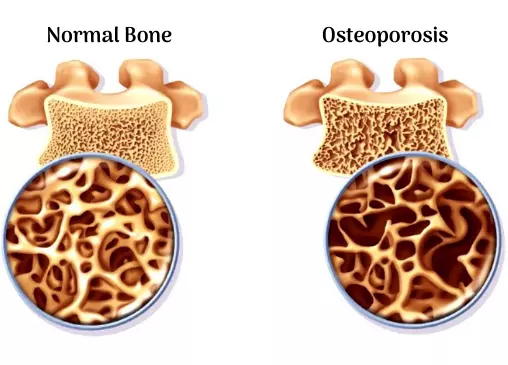
Osteoporosis means porous bone, a healthy bone looks like a honeycomb. When osteoporosis disease occurs, these honeycomb holes on the bone becomes larger than the healthier bone, because of this, the bones will lose the density and contain abnormal tissue structure.
Risk factors include: Age, reduced sex hormones, ethnicity (more common in white people and Asians), thin or small body structure, genetic factors, fracture history, smoking, inactive lifestyle, poor diet, heavy alcohol consumption, thyroid problems, and long term use of steroids.
Risk factors which can be changed: Eating disorders, smoking, intake of excessive alcohol, deficiency of calcium, magnesium and vitamin D, inactivity.
Signs and Symptoms
Loss of bone mass doesn't happen all of sudden. It is not noticeable until pain, loss of function or fracture occurs:
- Back pain often caused because of fracture or collapsed vertebra
- Gradual loss of height
- Curved spinal cord
- Stiff and painful joints
- Bone breaks much easy than expected, after a minor injury
Tests and Diagnosis
A doctor will consider the patient's family medical history and risk aspects. A bone mineral density (BMD) examination uses low levels of X-rays to find the proportion of mineral in your bones. It is a painless test where the scanner passes over your body; usually few bones are checked mostly in the hip and spine.
An ultrasound scan of the heel bone is an alternative way to evaluate for osteoporosis.
Treatment for Osteoporosis
Treatment aims to slow or prevent the development of osteoporosis and maintain healthy bone mineral density to prevent fractures. This is done through lifestyle changes, supplements and drugs including:
- Bisphosphonates to block cells that destroy bone
- SERMS to reduce risk of spine fractures
- Calcitonin to prevent spinal fracture
- Parathyroid hormone to stimulate new bone formation
- RANK ligand inhibitors to increase bone density
Prevention: Eat calcium rich foods, consume vitamin C and D, reduce salty foods, avoid alcohol, do bone bearing exercises, maintain healthy weight.
Concerned about Osteoporosis?
Book a consultation with Dr. Naresh Aremanda for expert diagnosis and treatment.
Book a ConsultationRelated